When most people think of endangered species, their minds usually turn to exotic species they may have never personally laid eyes on, something rare and beautiful. While it is tragic to lose a species of rare beauty, there are many more common species — including several endangered canine species — that are also facing the threat of extinction. Some of these can be found right in front of our noses.
Certain species of canines are one of the more ubiquitous groups of endangered animals. For some, they are little more than pests that poach livestock and disturb the peace. However, it is important to recognize these species’ role in the ecosystems they inhabit. Their presence in one is usually no accident. Sadly, their presence on an endangered canines list is usually anything but an accident.
Canines of all species are integral to controlling the populations of other animals that are considered pests. They target rodents, and as apex predators, keep the natural order of things balanced. An extinction of any one species from an ecosystem can have far-reaching implications for the future. Everything within a functioning system is somehow intertwined with something else. Here are 5 endangered canine species that are unfortunately looking at the end of the line, unless humans champion their preservation.
1. Ethiopian Wolf
The Ethiopian wolf hails from the Ethiopian Highlands, a rugged mass of mountains in Ethiopia that are sometimes called the “Rooftop of Africa” due to its staggering height of 1,500-4,500 meters. The current range of the Ethiopian wolf is isolated mountain ranges of 3,000-4,500 meters. They have an overall population of 360-440 individuals. Expanding human population and loss of habitat are the main threats that place the Ethiopian wolf on our endangered canines list.
2. Red Wolf
The red wolf is native to North America, and is often overshadowed by its cousin, the grey wolf. Once an apex predator across much of the midwest and southeast portion of the US, the red wolf seemed extinct in the wild in 1980. Conservation efforts for the red wolf began in 1976 with captive breeding programs that are purportedly meeting with some measure of success. Low prey density and predator species competition led to the dissipation of the red wolf population.
3. Mexican Grey Wolf
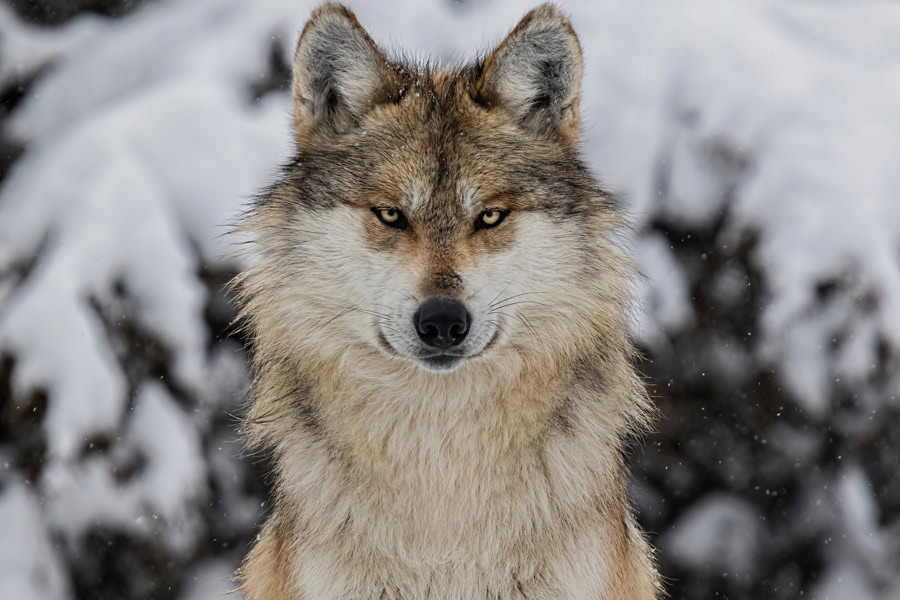
The Mexican grey wolf is a subspecies of the more well-known North American grey wolf. At one time it inhabited an expansive territory from central Mexico in the Sonoran and Chihuahuan deserts to western Texas, southern New Mexico, and central Arizona. A reduction in natural prey led to government-sponsored eradication of the Mexican grey wolf by ranchers as the species turned to preying on livestock. It became an endangered subspecies in 1976. It has remained as such to this day. There are just 340 individuals among 49 facilities in the US and Mexico.
4. Dhole
Pronounced like the pineapple producer Dole, the dhole is an Asiatic wild dog that is native to South and Southeast Asia. They typically hunt medium-sized animals like gazelles. Additionally, the dhole pups eat first at a kill. The biggest threats to the dhole are habitat loss, depletion of its prey, and competition from other predators.
5. African Wild Dog

Found only on the savannas and lightly wooded areas of Africa, the African wild dog is one of the world’s most endangered canine species. It hunts medium to large animals, such as the impala or gazelle. They are also capable of taking down zebras and warthogs when hunting in packs. Their population was once considered healthy at 500,000 individuals dispersed among 39 countries, but numbers have diminished drastically in recent years, with only 3,500-5,500 individuals amongst 14-25 countries. Additionally, habitat loss is the number one threat to the survival of the African wild dog.
Featured Image from Catherine Merlin/Unsplash