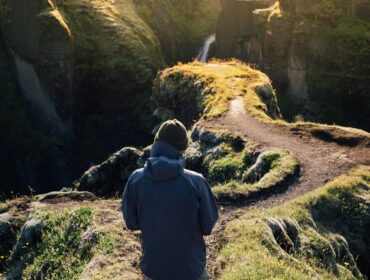
Every hiker has felt it — that quiet pull from a narrow path disappearing into the trees, or the overgrown remnants of a campsite hidden beneath the leaves. These forgotten places spark curiosity. Who walked here before us? Who built the fire rings now covered in moss? What stories are buried in the silence? Abandoned trails and forgotten campsites are more than just relics of the past. They are outdoor time capsules — silent witnesses to changing landscapes, shifting cultures, and the way nature patiently reclaims what was once its own.
Let’s step carefully into these hidden corners of the wilderness and explore the stories they still tell.
1. Trails That Fade But Never Vanish
Some trails disappear slowly — not because they were lost, but because they were left behind. Over decades, weather, erosion, and vegetation quietly erase the footprints of explorers, loggers, miners, and early park rangers. Yet even when they fade from maps, they remain in the landscape like faint scars — a cut through a hillside, a worn notch in a tree, or an old bridge post in the middle of nowhere.
In the Pacific Northwest, sections of early CCC (Civilian Conservation Corps) trails from the 1930s still exist beneath layers of moss. In the Appalachian regions, abandoned logging routes lead deep into forests that have long since regrown. And in the deserts of the Southwest, faint wagon ruts still cross open plains — reminders of how fragile and temporary our marks on the wild truly are.
Every trail has a reason it vanished. Some were rerouted for safety. Others fell out of use as industry faded or as parks expanded and focused on preserving nature over access. But none are ever completely gone. To follow one is to walk a line between past and present — a story told not in words, but in silence.
2. Forgotten Campsites and the Ghosts of Adventure
Deep in the woods, sometimes you find a circle of stones, a rusty can, or a set of wooden posts half-swallowed by the earth. These are the remnants of old campsites — once bustling with life, now reclaimed by time.
In the mid-20th century, car camping exploded in popularity. Families packed their station wagons and explored new parks and forests across North America. Many of those sites have since been closed, either to protect wildlife or because the land needed rest. Others were forgotten as new roads and campgrounds opened elsewhere.
What remains today are ghostly traces: melted glass in old fire pits, tin cans turned orange with rust, and foundations of forgotten ranger cabins. For hikers and vanlifers who stumble upon them, these places feel like echoes — a reminder that adventure once had a different rhythm.
Before GPS, before online maps, camping meant exploration and self-reliance. Every abandoned site holds a whisper of that old spirit.
3. Nature’s Slow Reclamation
Walk along a trail that hasn’t seen footsteps in decades, and you’ll notice how quickly the wilderness takes back what’s hers. Ferns fill old campsites. Roots split through pavement. Trees grow in perfect rows where cabins once stood.
This process — called ecological succession — is nature’s patient recovery. When human activity stops, the forest slowly rebuilds itself. First come mosses and grasses, then shrubs, and eventually trees. In time, even the most developed areas disappear beneath the canopy.
There’s a strange comfort in this. It reminds us that no matter how much we shape the land, the wild endures. The earth heals, layer by layer, season by season, until only hints of our presence remain.
A forgotten campsite in 1970 may now be a thriving woodland. The ash from old fires feeds new growth. The stories remain, but the land moves on.
4. The People Behind the Trails
Every abandoned trail has a human story — sometimes joyful, sometimes tragic. In many national forests and state parks, early trail systems were carved out by homesteaders, miners, or conservation workers. The CCC, active during the Great Depression, built thousands of miles of trails, bridges, and shelters still used today.
Some of these paths were later abandoned when towns emptied, industries collapsed, or wilderness preservation laws closed off certain zones.
In Alaska and the Yukon, entire routes built during the Gold Rush era now lie quiet, scattered with rusted tools and collapsed cabins. In the Rockies, forgotten mining trails snake toward ghost towns where only stone foundations remain. Each one tells a story about courage, ambition, and impermanence.
The trails we hike today exist because someone came before us with a vision — to explore, to connect, or to survive. Walking an abandoned one is like shaking hands across time.
5. When the Land Becomes Legend
Sometimes, forgotten places evolve into legends. Locals trade stories about haunted trails, lost camps, or mysterious ruins found deep in the woods. Many of these tales blend history and folklore — part truth, part imagination.
In New England, for example, hikers talk about the Lost Pond Camps, built by hunters in the early 1900s and abandoned after a brutal winter. In the desert Southwest, whispers persist about vanished prospector routes and hidden camps that appear only after flash floods reveal old paths.
While the facts may fade, the myths keep these places alive. They remind us that wilderness has always inspired storytelling — from Indigenous legends to modern campfire tales. Every trail carries more than dirt and roots; it carries memory.
6. Signs of the Past You Can Still Find
For explorers and hikers who like to look closely, the forest offers clues to its human past. You might not recognize them at first glance, but once you know what to look for, they appear everywhere.
-
Rock rings or brick circles: old fire pits or tent foundations.
-
Cut tree stumps in straight lines: evidence of early logging or trail clearing.
-
Rusty nails or glass shards: remnants of camps or cabins.
-
Moss-covered stone walls: property lines from long-forgotten farms.
-
Faded blazes on trees: the last markers of a once-maintained trail.
Finding these abandoned trails is like uncovering a forgotten map. But with discovery comes responsibility — always observe, never disturb. Leave artifacts where they are; they belong to the story of the land, not our backpacks.
7. Why We’re Drawn to the Forgotten
There’s something magnetic about abandoned trails in nature. They feel peaceful but heavy, beautiful but melancholy. Part of that attraction comes from what psychologists call “ruin appreciation” — our fascination with decay and transience.
In the wild, that feeling deepens. Seeing nature overtake what we built reminds us of balance, humility, and time. The quiet of a forgotten trail isn’t just physical; it’s emotional. It invites reflection — on where we’ve been, what we’ve left behind, and how everything eventually returns to the earth.
For many outdoor enthusiasts, exploring these hidden corners isn’t about thrill-seeking. It’s about connection — to history, to wilderness, and to the truth that nothing in nature ever truly disappears.
8. Hiking Abandoned Trails Responsibly
If you’re tempted to seek out forgotten paths or old camps, go with respect and caution. These places are fragile — both ecologically and historically.
Here are a few simple guidelines:
-
Research before you go. Check if access is legal or restricted. Some abandoned trails cross private land or protected zones.
-
Tread lightly. Avoid trampling vegetation or disturbing structures.
-
Never remove artifacts. Old tools, bottles, or signs belong where they rest.
-
Mark your route. It’s easy to lose your way on faded paths; bring GPS and paper maps.
-
Share the story, not the location. To prevent damage or looting, avoid posting exact coordinates of sensitive sites online.
Preserving these places means treating them as living museums — not playgrounds for explorers, but classrooms for storytellers.
9. The Forest Always Remembers
Even as trails fade and camps vanish, the forest keeps its own memory. The soil holds the ashes of campfires. The trees grow around old signs. Streams carry fragments of stone and metal long after their builders are gone.
Each season, nature writes a new chapter on top of the old one. And when hikers stumble across a forgotten site, they don’t just find an artifact — they find a conversation across generations.
The forest may not speak, but it remembers.
Conclusion: Listening to the Silence
Abandoned trails and forgotten campsites remind us that every path once mattered to someone. They are quiet now, but not empty. Their stillness carries the hum of time, the rhythm of footsteps long gone, and the endless cycle of growth and decay.
When you find one — a mossy trail, a hidden fire ring, a fallen sign — pause for a moment. Listen. The forest is telling you a story — not of loss, but of return. Because in the end, every forgotten place is just the wild finding its way home.