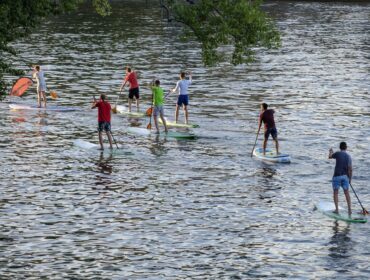
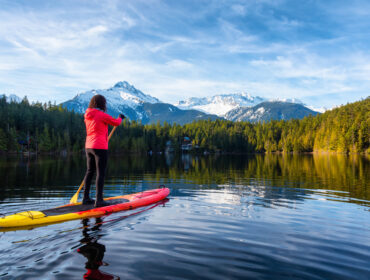
Stand‑up paddle boarding (SUP) offers the perfect blend of serene exercise, scenic exploration, and water therapy. But like any water sport, safety should be your top priority. Here’s a comprehensive guide—blended with expert tips and practical gear ideas (including gear you can find from SunnySports for North American paddlers)—to keep your SUP adventures both fun and secure.
1. Always Wear a Properly Fitting PFD

Even experienced swimmers should wear a Coast Guard–approved PFD (Type III or specifically designed for paddle sports) at all times.
-
Why it matters: Losing consciousness or hitting your head in water is harder to recover from than you’d think. Once you’re in the water, putting on a life jacket becomes cumbersome.
-
Gear tip: SunnySports carries sleek, low-profile inflatable paddle‑sport PFDs that don’t restrict paddling motion but inflate to full buoyancy upon need.
-
Pro Tip: Buy a properly sized life jacket—even a men’s size on a kid won’t fit securely under US/Canadian law.
2. Attach the Right Leash

A leash keeps you tethered to your board; an anchor when waves or currents strike.
-
Types:
-
Coiled leash (ideal for flat water): Keeps leash off the water and out of your way.
-
Straight / quick release leash: Better for rivers and tidal waters—release quickly if snagged.
-
-
Gear tip: SunnySports stocks durable coiled SUP leashes, well-rated for board sizes from 10–12 ft.
-
Safety note: Step into deeper rivers? A quick-release leash attached to your PFD is the safer choice .
3. Dress for the Water Temperature


What’s comfortable on the shore doesn’t guarantee safety once you fall in. Water chills your body much faster than air.
-
Warm days, cool water: Quick-dry layers like neoprene or polypropylene.
-
Cold water (< 60°F/15°C): Use wetsuits or drysuits to prevent hypothermia.
-
Gear tip: SunnySports offers neoprene paddle jackets and wetsuit tops—perfect for early spring or late autumn paddles.
4. Monitor Weather, Wind & Water Conditions

Even if it looks calm at launch, conditions can shift dramatically .
-
Check local forecasts: Particularly wind direction—onshore/offshore winds can make returns hard.
-
Scan for hazards: Currents, tides, crowd levels, submerged logs, or buoys .
-
Gear tip: Consider lightweight inflatable SUP boards from SunnySports—they’re easier to handle if wind pushes you off-course.
5. File a Float Plan & Stay in Touch


Leave details with someone onshore: your launch time, route plan, and expected return.
-
Tell a friend: Let them know your plan and return time.
-
Bring waterproof communication: A VHF marine radio or fully charged cellphone in a waterproof pouch is essential.
-
Gear tip: SunnySports stocks waterproof float bags and waterproof phone pouches, plus clip-on whistles for safety signaling.
6. Know Navigation Rules & Stay Visible
Just like cars, waterways have “Rules of the Road”
-
Stay to the right where possible.
-
Yield to motorized boats—they usually have limited maneuverability.
-
Be cautious near marinas or swimmers.
-
Wear bright gear and consider reflective tape or lights around dawn, dusk, or in fog.
-
Gear tip: Add a mountable SUP safety light (white flash or solid) from SunnySports to secure yourself when light starts to fade.
7. Never Paddle Under the Influence
Alcohol and paddling? A dangerous mix.
-
Legal risk: Many states apply BUI (Boating Under Influence) laws to paddle boards—penalties may include fines or jail.
-
Stay sharp: Impaired balance, judgment lapses, and delayed rescue response can be life-threatening.
-
Always paddle sober. It’s not only safer—it’s responsible.
8. Practice Re-Entry & Self-Rescue Techniques
Capsize? No sweat—if you’re prepared.
-
Self-rescue: Pull board with two hands, place stomach onto center line, then roll forward.
-
Swimming rescue: If you’re too fatigued or in conditions, consider sidling onto the board and pulling yourself up slowly—but keep one hand free to steady yourself.
-
Conditioning matters: Under 100 hours on water? Studies show first-timers are most at risk.
-
Gear tip: Keep a coiled leash on—you’re attached to your floating vessel while re-entering.
9. Paddle with a Buddy or in Groups
Solo paddling increases risk.
-
Buddy system: Guaranteed backup.
-
Group navigation: Use hand signals—pointing paddle = direction change, raising paddle = stop.
-
Solo? Avoid remote areas. Stick to places with other users and keep emergency gear close.
10. Keep a Safety Kit Onboard
Small extras go a long way in emergencies:
-
Whistle (audible over waves)
-
Waterproof VHF/maritime radio—not your phone
-
First aid kit, snacks, water bottle
-
Headlamp or SUP light for low-light situations
-
Paddle repair kit or duct tape
-
Gear tip: SunnySports bundles safety kits with whistles, lights, and dry pouch options for paddlers.
11. Learn Basic Rescue & Weather Awareness
Quick response saves lives.
-
Courses: American Canoe Association (ACA), US Coast Guard Auxiliary instruction available locally.
-
Weather & wind literacy: Learn to read forecasts and radar, adjust routes as conditions evolve .
-
Know your water: Talk with locals—surf shops, SUP marinas, lakeside stores—for insights on current tides, weeds, or hazards.
12. Stay Within Your Limits
Always paddle smarter—not harder.
-
Start small: Calm lakes or slow rivers for new paddlers.
-
Don’t go offshore: Especially if winds shift unexpectedly .
-
Watch fatigue: Always paddle against the wind or current on your outbound trip—it’s easier to return when tired.
Quick Checklist for Safe SUP Trips
| Category | Essentials |
|---|---|
| Personal Safety | PFD (worn or attached), coiled + quick release leash |
| Protection | Weather‑app check, SPF layers, wetsuit if needed |
| Gear | Whistle, VHF/phone pouch, light, repair kit |
| Navigation | Charts/maps, hand signals, right‑of‑way knowledge |
| Emergency Plan | Float plan, rescue practice, buddy check |
Real-Life Scenario
Scenario: Kelly and Sam launch on a lake at 4 p.m.
-
They check water temps (~55 °F) and don wetsuit tops.
-
Kelly wears a SunnySports inflatable PFD, Sam opts for a low-profile life vest.
-
Both attach light-duty coiled leashes, comfortable for flat-water.
-
They carry radios and waterproof phones.
-
Launch, paddle around, Sam capsizes near a shallow point and re-enters easily.
-
Sunset comes with fog and nearby fishermen; they activate SUP headlights and head in safely under group formation.
Final Words
SUP is a versatile, health-boosting, soul-refreshing sport—just remember it’s also a responsibility. With the right combination of safety knowledge, vigilance, and well-chosen gear (like the PFDs, leashes, lights, and dry bags from SunnySports), you’ll paddle with freedom—and peace of mind.
Stay safe, stay aware, and let every stroke bring joy.
FAQs: Paddle Boarding Safety
1. Do I really need to wear a life jacket when paddle boarding?
Yes. A PFD (Personal Flotation Device) is required by law in many regions, including the U.S. and Canada. Even if you’re a strong swimmer, unexpected weather, fatigue, or injury can make it a lifesaver—literally.
2. What type of leash should I use?
It depends on the environment:
-
Coiled leash for flatwater—stays out of the water and reduces drag.
-
Quick-release leash (attached to your PFD) is best for rivers or strong currents to avoid entanglement hazards.
3. What should I wear when paddle boarding in cold water?
Use a wetsuit or drysuit when water temperatures drop below 60°F (15°C). Cold shock is a real danger, even if the air is warm.
4. Is it safe paddle boarding alone?
It’s best to paddle with a buddy, especially in unfamiliar or changing conditions. If you do go solo, file a float plan, carry a communication device, and stay close to shore.
5. Can I paddle board in any weather?
No. Avoid paddling during:
-
High winds or offshore winds
-
Storms or lightning
-
Fog or low visibility
Always check marine forecasts before heading out.