You are deep in the woods. The trail fades, your phone shows no signal, and every direction looks the same. This is where a hiking compass becomes more than just a tool. It becomes your guide, your backup, and your confidence.
Many hikers rely on GPS today. But what happens when batteries die or signals disappear? A compass never runs out of power. It works in rain, snow, and remote terrain. Learning to use one might feel old school, but it can make all the difference when things get uncertain.
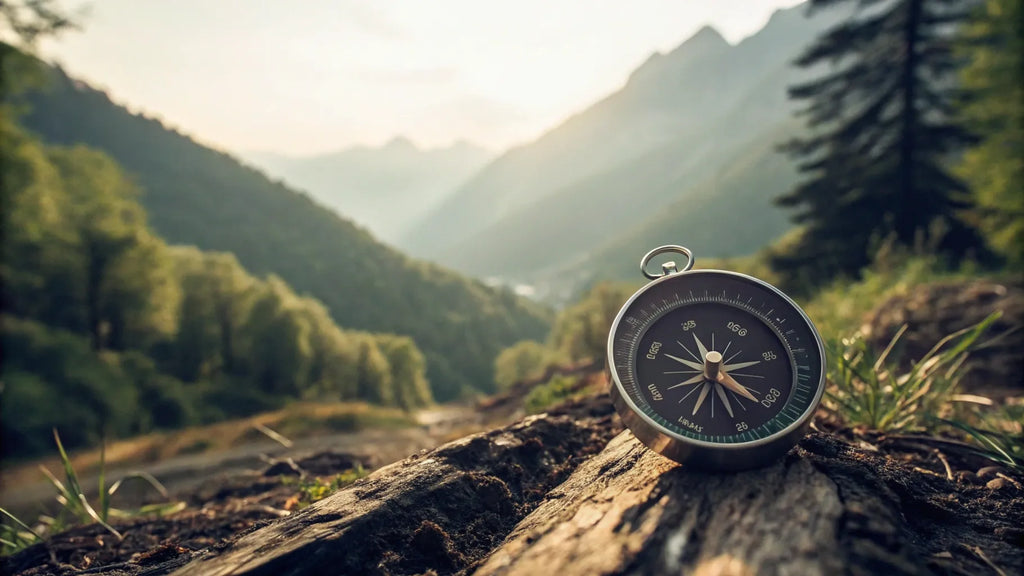
What Makes a Good Hiking Compass
Not all compasses are built the same. Some are basic and easy to use. Others come with advanced features for precise navigation.
When choosing a hiking compass, focus on reliability and simplicity first.
Here are the features that matter most:
- Stable needle: A fast settling needle gives accurate readings quickly
- Clear baseplate: Helps you align the compass with a map easily
- Rotating bezel: Allows precise direction setting
- Durable build: Should handle drops, cold weather, and moisture
- Lightweight design: You should barely notice it in your pack
A simple and dependable option like the Suunto A-10 NH Compass checks all these boxes. It is lightweight, easy to use, and accurate. Perfect for beginners and experienced hikers alike.
The goal is not to find the most complex compass. It is to find one you trust when you need it most.
How to Use a Hiking Compass on the Trail

Using a compass might seem tricky at first, but it becomes second nature with practice.
Start by understanding the basics. Your compass needle always points north. That simple fact helps you orient yourself anywhere.
Here is how to use it effectively:
- Find north: Hold the compass flat and let the needle settle
- Align with your map: Match north on the compass with north on the map
- Set your direction: Use the bezel to choose your path
- Follow your bearing: Keep the needle aligned as you move
It sounds simple, but it requires attention.
Navigation is not about knowing where you are. It is about knowing where you are going next.
That mindset changes how you approach hiking.
Instead of guessing, you move with purpose.
And once you gain confidence, you start to enjoy the process. Navigation becomes part of the adventure, not just a safety tool.
Why Every Hiker Still Needs a Compass

It is easy to rely on technology. Apps are convenient. GPS devices are powerful.
But they all share one weakness. They depend on power and signal.
A hiking compass does not.
When conditions get tough, a compass keeps working. Rain does not affect it. Cold weather does not drain it. Remote locations do not limit it.
Think about situations where a compass becomes essential:
- No signal areas: Remote trails often have zero coverage
- Battery failure: Devices can run out of power unexpectedly
- Low visibility: Fog or snow can hide landmarks
- Trail confusion: Intersections and faded paths can mislead
Even experienced hikers carry one as a backup.
It is not about replacing technology. It is about adding reliability.
A small tool in your pocket can prevent big problems later.
Tips to Build Confidence with Your Compass

The best way to build confidence is to practice before you need it.
Start in familiar areas. Try navigating short distances using your compass. Compare it with landmarks around you.
Here are a few helpful tips:
- Practice often: The more you use it, the easier it feels
- Pair with a map: Compass and map work best together
- Keep it level: Tilting affects accuracy
- Check regularly: Confirm your direction often
- Stay patient: Mistakes are part of learning
You do not need to be perfect.
You just need to be prepared.
The more comfortable you get, the more freedom you gain on the trail.

Frequently Asked Questions
Do I still need a compass if I have GPS
Yes. A compass is a reliable backup when devices fail or lose signal.
Is a hiking compass hard to use
Not at all. Basic navigation can be learned quickly with a little practice.
What is the difference between a compass and GPS
A compass shows direction, while GPS gives location. Both work best together.
Can beginners use a hiking compass
Yes. Simple models are designed for easy use and learning.
How accurate is a hiking compass
Very accurate when used correctly. It does not depend on batteries or signal.
What should I carry with a compass
A map is essential. Together, they provide complete navigation.