The Call into the Quiet
There’s a quiet voice that sometimes whispers in the middle of a crowded life – one that urges us to leave it all behind, if only for a moment. The phone notifications, traffic jams, meetings, and social noise – they fall away the moment we step into the wilderness. What’s left is silence. Stillness. And, if we stay long enough, the sense that we’re not really alone. We are alone with god.
Across cultures and centuries, the wilderness has been more than just a setting for adventure; it has been a place of transformation – a sacred meeting ground between the soul and the Divine.
Why the Wilderness?
It’s hard to find God when we’re constantly distracted. Nature doesn’t demand attention the way the digital world does. It invites us in slowly. A breeze through pine trees, the rhythm of your boots on a trail, or the sound of a river cutting through rock – these things ask nothing of us, yet offer everything.
Biblical stories are filled with wilderness journeys. Moses met God in the desert. Elijah heard the still, small voice on the mountain. Jesus withdrew to the wilderness to pray. Why? Because solitude clears the clutter of the soul. In the wild, there are no masks. No noise. Just you – and whatever you believe is waiting beyond the silence.
The Wilderness as Mirror

When we walk into untamed places, we also walk inward. The outer landscape often reflects the inner one. Rocky, open, unpredictable. In the wild, we face our fears, our thoughts, our pain. And strangely enough, it is there – when we feel most vulnerable – that many of us begin to sense something greater than ourselves.
Some call it God. Others call it presence, peace, or truth. But almost everyone who has spent extended time alone in nature agrees: there’s a shift. A deep awareness rises. Something sacred stirs. It’s like we are alone with god.
What It Feels Like to Be Alone With God

Imagine standing at the edge of a cliff at dawn. The sun rises slowly over the horizon. There’s no Wi-Fi. No one asking for your time. Just the wind on your face and the heartbeat in your chest.
This is the moment when many people feel closest to God – not because they found Him, but because they finally got quiet enough to listen.
Here’s what being alone with God often feels like:
-
Freedom – No pressure to perform or be anyone else
-
Clarity – Thoughts become clearer when the noise fades
-
Peace – The inner storm calms with the rhythm of creation
-
Reconnection – A sense of coming home, not to a place, but a presence
-
Awe – Mountains, oceans, stars – they remind us how small we are, yet how deeply loved
How to Meet God in the Wilderness

You don’t need a passport or a mountain summit to meet God. But you do need intention. Here’s how to start:
1. Go Alone (or Mostly Alone)
Solitude doesn’t mean total isolation. But try to disconnect from constant human interaction – even for a short while. Silence helps us hear better.
2. Leave the Noise Behind
Turn off your phone. Or better yet, leave it in the car. Bring only what you need to be safe and present. The wilderness has its own soundtrack – let it fill you.
3. Walk Slowly
The goal isn’t distance. It’s presence. Move slowly. Notice details. Feel textures. Smell the earth. Touch the bark. Let creation speak.
4. Sit and Be Still
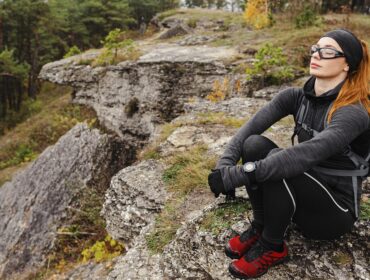
Find a place – a rock, a stump, a quiet meadow. Sit. Don’t pray yet. Don’t plan. Just be. Let your breath slow and your thoughts drift. Let God come to you.
5. Speak Honestly
When you do speak, be real. No polished prayers. Tell God what you’re afraid of, what you hope for, what hurts. Or say nothing. God hears even the silence.
6. Listen
Not just with your ears. But with your heart. Maybe God won’t speak in words. Maybe it’ll be a sense of comfort. A breeze. A burst of joy. Listen anyway.
What You Might Find
You may not leave the wilderness with all the answers. In fact, you may leave with more questions. But you’ll likely walk away with something deeper: peace.
You might feel seen for the first time in a long time, like a part of something bigger. You might feel healing begin in places you forgot were broken.
The wilderness doesn’t fix you. It just removes what’s in the way. And in that space- God waits.
Stories from the Wild
One woman hiked a forest trail every weekend during a season of grief. She didn’t talk to anyone. Just walked, cried, and sat by the same stream. “I didn’t hear a voice,” she says. “But I stopped feeling alone.”
A man recovering from burnout camped solo in the desert. He journaled by firelight and woke with the sun. “For the first time in months, I felt clear,” he says. “Like God was in the stillness, waiting for me to stop running.”
These aren’t rare stories. They are everywhere. Yours could be next.
You Don’t Have to Be “Spiritual”
One doesn’t need to be religious or perfect to meet the Divine in the wilderness. You just need to show up – with your questions, your pain, and your heart open.
Nature doesn’t judge. God doesn’t need you to say the right words. You can just come. That’s enough.
Final Thoughts: Let the Wilderness Lead You Home
We spend so much time trying to escape silence. But the wilderness teaches us that silence is not empty – it’s full. Full of beauty, healing and sacredness.
When you go alone into nature, you may discover what people across the world have known for centuries: that God is not far off. He is close – as close as the wind on your face, the breath in your lungs, and the stillness in your soul.
Let the forest, the mountain, the desert, or the sea become your chapel. Let the path lead not just outward – but inward. Because in the wild, when everything else falls away, you are not alone.
FAQs: Meeting the Divine in Nature
Do I need to believe in God to have this experience?
No. Many people feel a deep sense of peace or connection in nature even if they don’t identify with a specific religion.
Is it safe to go into the wilderness alone?
It can be safe if you plan ahead, tell someone where you’re going, and bring the right gear. Start with short trips and build from there.
What if I don’t “feel” anything spiritual?
That’s okay. Sometimes, the healing happens slowly. Just showing up and being still is powerful.
Can I bring a journal or Bible?
Absolutely. Reflecting or writing can help you process your experience. Just don’t let it distract from the present moment.
How long should I stay out there?
Even an hour can make a difference. But if you can, give yourself half a day or more to really settle into the stillness.