Steep trails have a way of humbling even experienced hikers. One moment you are enjoying the view, and the next you are leaning forward, calves burning, lungs working hard, and wondering how much farther the climb goes. The truth is, strong hiking is not just about endurance. It is about targeted hiking strength training that prepares your legs, core, and balance for uneven terrain and long ascents.
If you want to handle steep trails with confidence, the right hiking strength training routine can make all the difference. Let us break down how to build the kind of strength that translates directly to the trail.
Why Strength Training Matters for Steep Hiking
When you hike uphill, your body fights gravity with every step. Your glutes drive you upward, your quads control each step. Your calves stabilize your ankles, your core keeps you upright on rocky sections. Without proper strength, fatigue sets in faster, your form suffers, and the risk of injury increases.
Strong muscles also improve efficiency. Instead of feeling drained halfway through a climb, you maintain steady power and better posture. That means more energy left to enjoy the summit.


Focus on Lower Body Power
Steep trails demand powerful legs. Prioritize exercises that mimic uphill movement.
Squats
Squats build strength in your glutes and quads, the primary muscles used when climbing. Start with bodyweight squats and gradually add resistance. Focus on controlled movement and proper form.
Lunges
Forward and reverse lunges closely mirror hiking steps. Walking lunges are especially effective for balance and coordination. Add dumbbells once you feel stable.
Step Ups
Find a sturdy box or bench. Step up and drive through your heel, just as you would on a steep trail. This exercise directly translates to uphill hiking strength.
Perform these movements two to three times per week for noticeable improvement.
Build Endurance with Incline Training
Strength alone is not enough. You need muscular endurance to sustain climbs.
Treadmill incline walking is an excellent option if you train indoors. Gradually increase the incline over time. If you prefer outdoor workouts, hill repeats are highly effective. Choose a moderate hill, hike up at a steady pace, then walk back down and repeat.
These sessions condition your legs to handle sustained elevation gain without fatigue setting in too quickly.


Strengthen Your Core for Stability
A strong core keeps you balanced on uneven ground and prevents lower back strain.
Planks
Hold a plank position for 30 to 60 seconds. Focus on maintaining a straight line from head to heels.
Side Planks
These target oblique muscles that stabilize your torso during side to side shifts on rocky paths.
Dead Bugs
This controlled movement improves coordination between upper and lower body while reinforcing core engagement.
Aim for core training two to three times weekly. Consistency is more important than intensity at first.
Do Not Ignore Your Calves and Ankles
Steep trails often include loose gravel, roots, and uneven rocks. Strong calves and stable ankles help you adjust quickly to changing terrain.
Calf Raises
Stand on a step and raise your heels slowly, then lower with control. This strengthens the lower leg and improves push off power.
Single Leg Balance
Stand on one leg for 30 seconds. Close your eyes or stand on an unstable surface to increase the challenge. This simple drill enhances ankle stability.

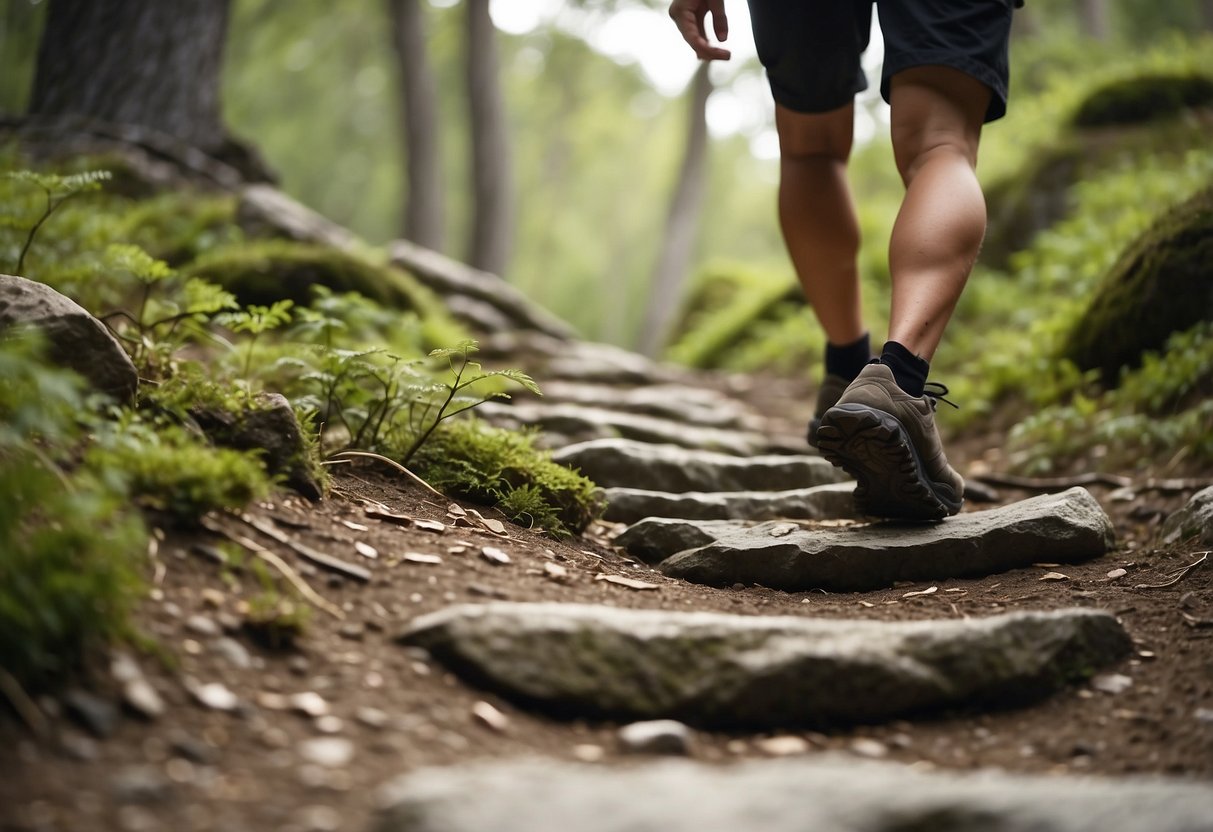
Add Weighted Pack Training
If you plan to carry a backpack on steep trails, train with weight. Start light and gradually increase the load. Wear your pack during incline walks or step up sessions.
This prepares your body for real trail conditions. It also strengthens supporting muscles that may not be fully activated during bodyweight workouts.
Improve Mobility and Flexibility
Tight hips and hamstrings can limit stride length and cause strain on climbs. Incorporate dynamic stretching before workouts and static stretching afterward.
Focus on hip flexors, hamstrings, calves, and lower back. Foam rolling can also reduce muscle tightness and improve recovery between training sessions.
Structure a Simple Weekly Plan
A balanced hiking strength training week might look like this:
Day one: Lower body strength
Day two: Core and mobility
Day three: Incline walking or hill repeats
Day four: Rest or light stretching
Day five: Lower body strength with weighted pack
Weekend: Practice hike on local trails
Adjust intensity based on your current fitness level. The goal is steady progress, not exhaustion.
Practice Smart Recovery
Training for steep trails stresses your muscles. Rest days are essential. Hydrate well, eat balanced meals with enough protein, and prioritize sleep. Recovery allows muscles to rebuild stronger.
If you feel sharp pain rather than normal muscle soreness, take a break and evaluate your form.
Mental Strength Matters Too
Steep trails challenge more than your legs. They test focus and determination. During training, practice steady breathing and positive self talk. Break climbs into smaller sections instead of focusing on the entire ascent.
Confidence grows when your body feels prepared. The more consistent your hiking strength training routine, the more capable you will feel when facing tough terrain.
Bringing It All Together
Handling steep trails is not about being the fastest hiker. It is about being prepared. With targeted lower body work, incline training, core strength, and mobility exercises, you can approach challenging climbs with power and control.
Strong muscles support better posture. Better posture reduces fatigue. Reduced fatigue means more energy to enjoy the view from the top.
The next time you see a steep trail ahead, you will not hesitate. You will know your training has prepared you for the climb.
FAQs
How often should I do hiking strength training?
Two to three focused strength sessions per week are effective for most hikers. Combine them with incline or hill workouts for balanced preparation.
How long does it take to see improvement?
Many people notice better endurance and stability within four to six weeks of consistent training.
Can beginners train for steep trails?
Yes. Start with bodyweight exercises and gentle inclines. Gradually increase difficulty as your strength improves.
Should I train with trekking poles?
If you plan to use trekking poles on steep trails, practice with them during training hikes. This builds coordination and upper body engagement.
Is cardio enough for steep hiking?
Cardio helps with endurance, but without strength training your muscles may fatigue quickly on steep ascents. Combining both delivers the best results.